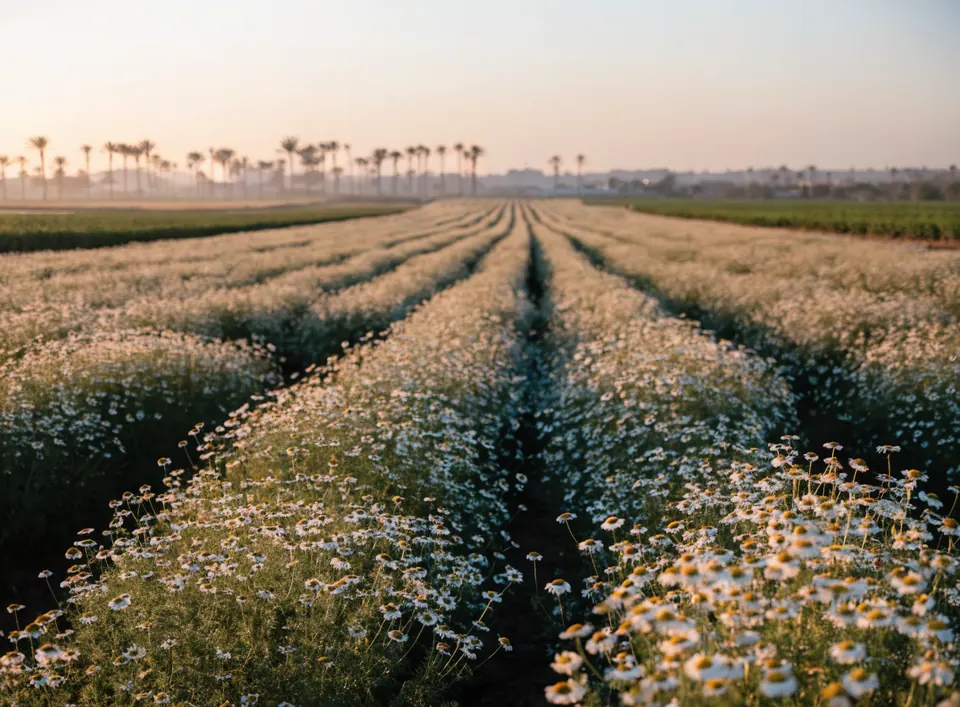
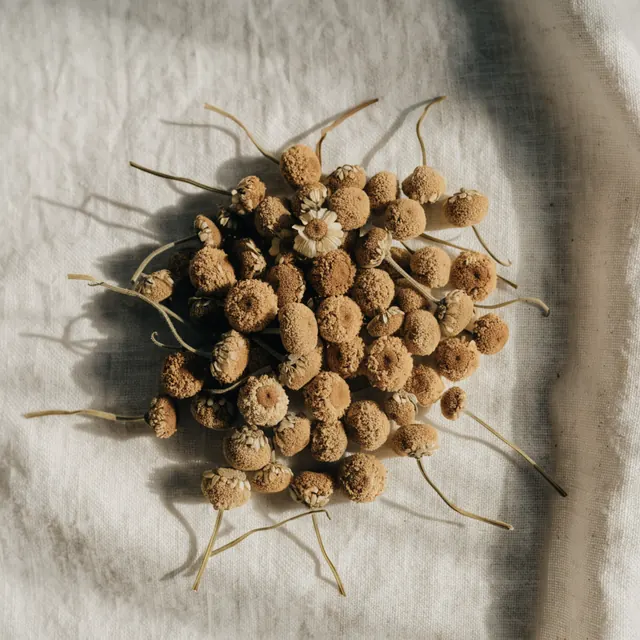
Chamomile
Matricaria chamomilla — flower heads
A winter crop in Egypt, harvested December to April, main flush January to March. Intended as whole flower heads and cut.
Specification →Egyptian chamomile, hibiscus and leaf herbs.
We are setting up a cleaning, grading and export packing operation for medicinal and aromatic plants, to be sited in Fayoum — inside the growing area, working to the buyer's written specification.
We do not currently offer processing services to third parties. We do not accept toll or contract work, take bookings, or hold capacity — there is no equipment to do it with yet. If you need tonnage this season, we are not yet your supplier. If you are mapping Egyptian origin for next year, this is the right time to assess us — see exactly what we are building.
Fayum Botanicals is being set up to clean, grade and pack Egyptian medicinal and aromatic plants for export — chamomile, hibiscus and mint first. The line is planned for Fayoum, inside the area where the crop is grown and dried.
We are not a trading desk. The intention is to take physical responsibility for a lot — to know which delivery it came from, what was removed from it and what it measures — rather than to move another supplier's bag under our name.
Until the line runs we would rather be judged on the specification we can discuss than on volume we cannot yet ship. Everything on this site is written on that basis.
Full parameter tables for chamomile and hibiscus — botanical identity, grades, moisture, water activity, ash, microbiology, packing and shelf life — are set out on the products page.
Note: the figures on the products page are target specifications, not test results — no commercial production has taken place, no shipment has been made, and they are not an offer or a commitment to supply. The microbiological limits also assume a validated microbial-reduction step, and the planned line includes no such step.
A winter crop in Egypt, harvested December to April, main flush January to March. Intended as whole flower heads and cut.
Specification →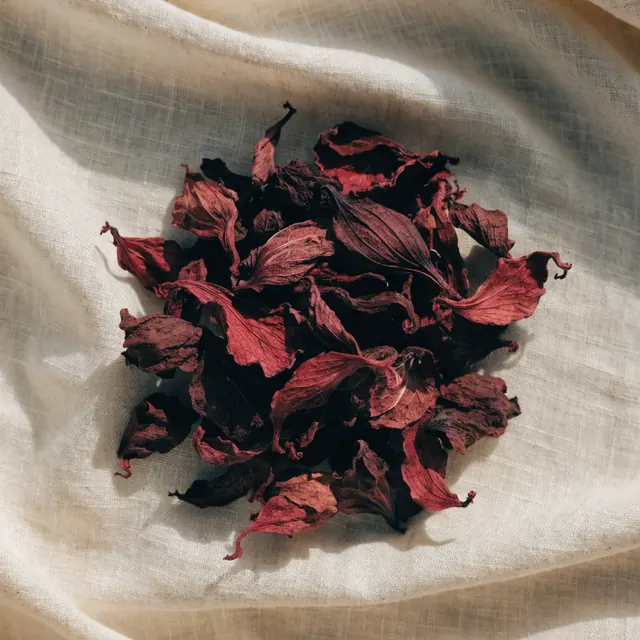
Dried calyces for infusions, blends and colour extraction. Intended whole and cut.
Specification →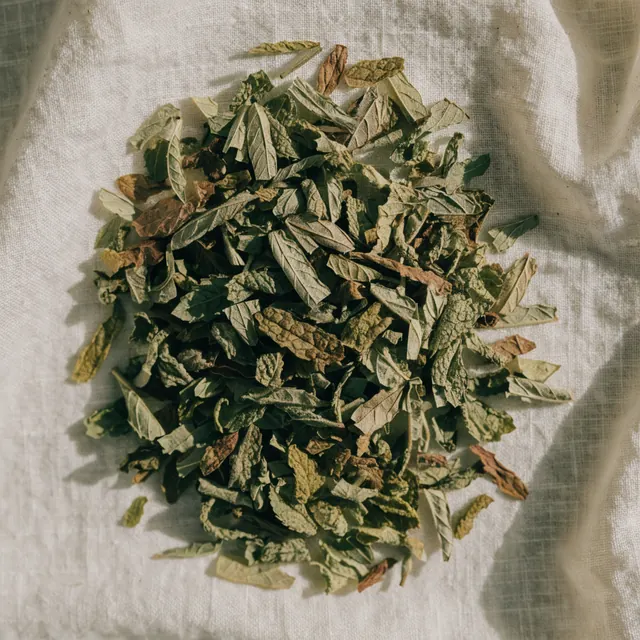
Species and specification are being confirmed — Egyptian production is predominantly spearmint. Tell us which profile your blend needs.
Ask us about mint →Images are illustrative of the crops and the Egyptian growing belt — not photographs of Fayum Botanicals material.
Send the parameters and test methods you must meet. We reply in writing with what we can meet, what we cannot, and what needs a trial — before anything is committed.
We hold no certifications today and will not imply otherwise. When we hold one, you will be sent the certificate, not a bullet point.
Results a buyer relies on are to come from an accredited external laboratory, named to you in advance. No laboratory has been appointed at this date, and we do not intend to self-certify.
If a lot will miss a parameter or a date, you hear it before shipment. That is the whole of our commercial argument at this stage.
The Fayoum depression, with the neighbouring Beni Suef and Minya governorates, is Egypt's principal growing area for chamomile and a number of leaf herbs. It is fed by the Bahr Yussef, a branch of the Nile, and its dry air suits open drying.
Siting the line inside the growing area shortens the gap between harvest, drying and processing, and would keep us close enough to the crop to know what we are buying.
We will tell you in writing what we can meet and when — including if the answer is not yet.